
Tesamorelin Peptide: A Complete Research Guide

Tesamorelin Peptide: A Complete Research Guide
Tesamorelin peptide has become one of the most talked-about compounds in growth hormone secretagogue research. Originally developed to study visceral fat reduction in specific patient populations, tesamorelin is a synthetic analog of growth hormone-releasing hormone (GHRH) that stimulates the pituitary gland to increase natural production of growth hormone.
For researchers studying lipolysis, body composition, and metabolic function, tesamorelin represents a compelling subject of study. This guide breaks down what current research suggests about its mechanism, how it compares to other peptides, and answers the most commonly searched questions about tesamorelin peptide.
What Is Tesamorelin Peptide?
Tesamorelin is a 44-amino acid peptide that functions as a GHRH analog. It was originally granted approval under the brand name Egrifta for research into HIV-associated lipodystrophy — a condition involving abnormal fat redistribution. What made tesamorelin stand out in clinical study was its specific effect on visceral adipose tissue, the stubborn fat that accumulates around internal organs.
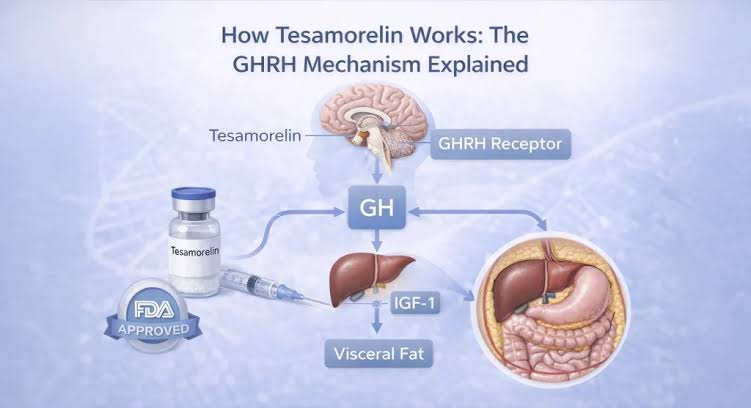
Unlike exogenous growth hormone administration, which introduces synthetic GH directly into the body, tesamorelin works upstream — signaling the pituitary to produce more of its own growth hormone in a regulated, pulsatile manner. This preserves the body’s natural feedback loops, which is why researchers find it a more physiologically interesting compound than direct GH supplementation.
Does Tesamorelin Decrease Belly Fat?

This is one of the most researched aspects of tesamorelin, and the clinical data is notable. In the original Phase III trials that led to its FDA approval for HIV-associated lipodystrophy, participants showed a statistically significant reduction in visceral adipose tissue — the metabolically active fat stored deep in the abdominal cavity surrounding organs.
A common question researchers encounter is: does tesamorelin decrease belly fat? The trial data suggests it specifically targets visceral fat rather than subcutaneous fat. This distinction matters enormously. Subcutaneous fat sits beneath the skin and is relatively benign metabolically. Visceral fat, by contrast, wraps around organs and is strongly linked to insulin resistance, cardiovascular risk, and inflammatory markers.
The mechanism behind this selectivity involves tesamorelin’s effect on lipolysis — the breakdown of stored fat into free fatty acids. Elevated growth hormone levels increase hormone-sensitive lipase activity, which preferentially mobilizes visceral fat stores. Research indicates that this effect is most pronounced in individuals with elevated visceral fat at baseline.
Will I lose weight taking tesamorelin? — this is a question that requires nuance. Clinical studies showed reductions in visceral fat mass, but total body weight changes were more variable. Some study participants maintained overall weight while shifting body composition — less visceral fat, improved metabolic markers — without the number on the scale moving dramatically. Weight loss and fat loss are not the same metric, and tesamorelin’s research profile reflects this distinction.
What Is the Best Peptide for Belly Fat?
When researchers evaluate what is the best peptide for belly fat, tesamorelin consistently enters the conversation alongside a few other compounds:
- Tesamorelin: The most clinically validated for visceral fat reduction specifically. Direct GHRH analog with Phase III data.
- CJC-1295 (with DAC): Another GHRH analog, longer half-life, less targeted research on visceral fat specifically.
- Ipamorelin: A GHRP (growth hormone releasing peptide) that works through ghrelin receptors. Often researched in combination with GHRH analogs.
- AOD-9604: A fragment of the C-terminus of growth hormone. Limited but interesting research on lipolysis stimulation.
What is the best peptide to lose belly fat? — the answer depends on what outcome is being measured. For visceral fat specifically, tesamorelin has the strongest clinical backing. For broader growth hormone optimization, CJC-1295/ipamorelin combinations are frequently studied. For isolated lipolysis without GH elevation, AOD-9604 is an interesting research candidate.
Tesamorelin distinguishes itself because it doesn’t just increase GH — it does so in a way that has demonstrated preferential effect on the most metabolically dangerous fat depot in the body.
How Long Can You Take Tesamorelin Peptide?

How long can you take tesamorelin peptide? In clinical settings, the original studies treated participants for 26 weeks (approximately 6 months), with some extension studies pushing to 52 weeks. The data showed sustained visceral fat reduction during the treatment period.
How long can you stay on tesamorelin? Most research protocols reference cycles of 3 to 6 months, followed by a discontinuation period. This mirrors how endogenous hormone systems naturally operate — pulsatile stimulation followed by recovery. Continuous, indefinite use without breaks is not well-studied and is generally not recommended in research literature.
The rationale for cycling relates to receptor sensitivity. GHRH receptors can downregulate with constant stimulation, potentially diminishing response over time. Cycling protocols allow receptor populations to reset, maintaining the compound’s effectiveness across multiple treatment periods.
What Happens When You Stop Taking Tesamorelin?

What happens when you stop taking tesamorelin? The clinical extension data provides important context here. In studies where tesamorelin was discontinued, visceral fat tended to gradually return toward baseline over a period of weeks to months.
Does belly fat come back after stopping tesamorelin? — the short answer based on available research is that without sustained lifestyle intervention, the metabolic environment that allowed visceral fat accumulation in the first place remains. Tesamorelin addresses the symptom (excess visceral fat) through growth hormone stimulation, but discontinuation removes that stimulus.
This is why researchers emphasize that tesamorelin is most effectively studied in combination with diet and exercise protocols. The compound creates a favorable metabolic window for fat mobilization, but sustained results appear to require addressing the underlying factors that drove fat accumulation.
What Is the Strongest Peptide to Build Muscle?
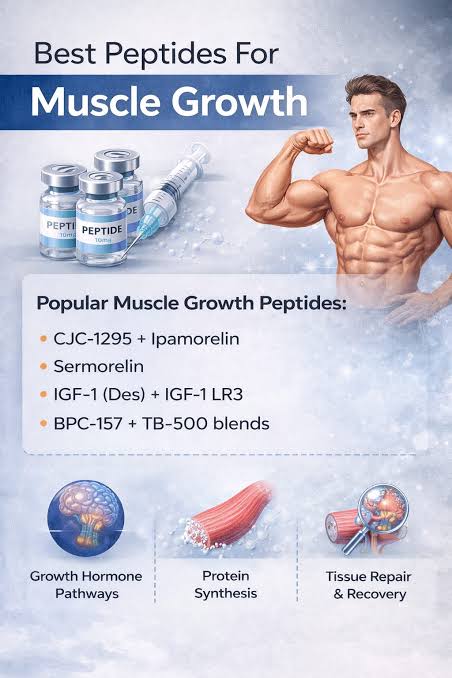
What is the strongest peptide to build muscle? This is where category matters. Tesamorelin is optimized for fat loss research, not hypertrophy. For muscle-building applications, the research landscape points toward different compounds:
- Growth Hormone Secretagogues (GHRH + GHRP stacks): CJC-1295 combined with ipamorelin or GHRP-6 for synergistic GH elevation
- BPC-157: Studied for tendon and ligament repair, recovery enhancement
- TB-500: Research into muscle recovery and injury rehabilitation
- MOTS-c: Mitochondrial-derived peptide studied for metabolic optimization and exercise performance
Tesamorelin does elevate growth hormone, which indirectly supports muscle preservation and recovery. But for researchers specifically targeting hypertrophy or strength, tesamorelin is better understood as a body composition modifier than a primary anabolic agent.
Which Is Better, Sermorelin or Tesamorelin?
Which is better, sermorelin or tesamorelin? both are GHRH analogs, but they differ in important ways:
| Feature | Tesamorelin | Sermorelin |
|---|---|---|
| Amino Acids | 44 | 29 |
| Half-Life | ~2-3 hours | ~30 minutes |
| Clinical Approval | FDA-approved (HIV lipodystrophy) | FDA-approved (diagnostic GH testing) |
| Visceral Fat Research | Extensive Phase III data | Limited |
| Dosing Frequency | Once daily | Once daily (before bed) |
| Cost (Research) | Higher | Lower |
Sermorelin is a truncated version of GHRH the first 29 amino acids of the endogenous 44-amino-acid hormone. Tesamorelin is a full-length analog with modifications that improve stability and half-life.
For visceral fat research, tesamorelin has the stronger evidence base. For general growth hormone optimization and anti-aging research, sermorelin is commonly studied and more cost-effective for research budgets. Neither is objectively “better” the right choice depends entirely on the research question being asked.
What to Avoid When Taking Tesamorelin
What to avoid when taking tesamorelin? Research literature highlights several considerations:
- High glycemic meals close to administration elevated blood glucose and insulin can blunt growth hormone release. Most protocols recommend administration in a fasted state.
- Concurrent use of somatostatin analogs — these compounds suppress GH release and would directly counteract tesamorelin’s mechanism.
- Glucose loads before bed (if dosing nocturnally) — GH pulses naturally peak during deep sleep, and insulin spikes disrupt this pattern.
- Combination with exogenous GH — redundant and potentially counterproductive, as exogenous GH suppresses endogenous production through negative feedback.
What Is the Best Time to Take Tesamorelin?
What is the best time to take tesamorelin? Clinical protocols administered tesamorelin subcutaneously once daily. The original prescribing information recommended morning administration on an empty stomach.
The rationale is twofold. First, growth hormone response to GHRH stimulation is more robust in the fasted state. Second, morning dosing aligns with the body’s natural circadian rhythm of hormone production. Some researchers explore nocturnal dosing to amplify the natural overnight GH pulse, but the clinical data supporting tesamorelin specifically used morning administration.
Summary
Tesamorelin peptide occupies a unique position in growth hormone secretagogue research. Its clinical validation for visceral fat reduction sets it apart from peptides that are studied based on mechanistic plausibility alone. The compound’s selectivity for metabolically harmful visceral fat, its preservation of natural feedback loops, and its established safety profile in multi-month studies make it a cornerstone of body composition research.
For researchers looking to study tesamorelin or compare it with related compounds like sermorelin, CJC-1295, or ipamorelin, Warehouse Peptides offers research-grade peptides with third-party purity testing. All products are intended for laboratory, analytical, and research purposes only.
1. What is tesamorelin and how does it work?
Tesamorelin is a synthetic analogue of growth hormone-releasing hormone (GHRH). Rather than supplying growth hormone directly, it acts on GHRH receptors in the pituitary gland to stimulate the body’s own growth hormone release. This can increase downstream insulin-like growth factor-1 (IGF-1), which plays a role in metabolism and body composition. Clinical research has focused particularly on visceral adipose tissue (VAT), the fat stored around internal abdominal organs.
2. What is tesamorelin used for?
In the United States, tesamorelin is FDA-approved to reduce excess abdominal fat in adults with HIV-associated lipodystrophy. Its approved indication is specific; it should not be described as a general-purpose weight-loss medication. Research has also investigated tesamorelin in areas such as visceral adiposity, liver fat, and metabolic health, but those applications should be distinguished from its approved use. (FDA Access Data)
3. Does tesamorelin actually reduce visceral fat?
Clinical trials provide evidence that tesamorelin can reduce visceral adipose tissue in the population studied for its approved indication. In a randomized trial involving people with HIV-associated abdominal fat accumulation, tesamorelin reduced VAT significantly compared with placebo over six months. Another study reported approximately an 18% reduction among participants who continued treatment for 12 months. (PubMed)
This distinction matters because visceral fat is not the same as all body fat. Research has shown a more pronounced effect on visceral adiposity than on subcutaneous fat.
4. What is the relationship between tesamorelin, growth hormone, and IGF-1?
Tesamorelin works through the GHRH–growth hormone–IGF-1 axis. After tesamorelin activates GHRH receptors, the pituitary releases growth hormone. Growth hormone then contributes to increased IGF-1 production, primarily through the liver.
This pathway helps explain both the research interest and some of the safety considerations surrounding tesamorelin. Clinical studies have documented increases in IGF-1, while the FDA prescribing information warns about elevated IGF-1, glucose intolerance or diabetes, fluid retention, and other potential adverse effects.
5. Is tesamorelin a weight-loss peptide?
It is more accurate to describe tesamorelin as a GHRH analogue that has been clinically studied for reducing visceral abdominal fat rather than simply calling it a weight-loss peptide.
The distinction is important. Its FDA-approved indication targets excess abdominal fat associated with HIV lipodystrophy, not routine weight management. Clinical research has demonstrated reductions in visceral adipose tissue, while effects on overall body weight or subcutaneous fat do not necessarily mirror the reduction in visceral fat.
6. What does research say about tesamorelin and liver fat?
Researchers have investigated whether reducing visceral adiposity with tesamorelin also affects ectopic fat stored in the liver. A randomized clinical trial involving people with HIV-associated abdominal fat accumulation found that tesamorelin reduced both visceral adipose tissue and liver fat compared with placebo over six months.
These findings have encouraged further investigation into the relationship between the growth hormone axis, visceral fat, and metabolic health. However, liver-fat research should not be interpreted as proof that tesamorelin treats every form of fatty liver disease.
7. How is tesamorelin different from sermorelin?
Tesamorelin and sermorelin both relate to the GHRH pathway, but they are not identical compounds. Tesamorelin is a longer, modified GHRH analogue developed to stimulate endogenous growth hormone release and has clinical evidence supporting reduction of visceral adipose tissue in its approved population. Sermorelin is another GHRH-related peptide that has been studied for its ability to stimulate growth hormone release.
For researchers comparing tesamorelin vs sermorelin, the most useful factors include molecular structure, receptor activity, research population, clinical evidence, regulatory status, and the specific biological outcome being studied. One should not assume that evidence for one compound automatically applies to the other.
8. What should researchers consider when evaluating tesamorelin research products?
Researchers should evaluate much more than the advertised peptide name or stated purity. Important considerations include compound identity, analytical testing, batch-specific documentation, purity, storage conditions, formulation information, and supplier transparency.
For clinical tesamorelin products, researchers and healthcare professionals should also distinguish approved pharmaceutical products from products marketed solely for laboratory research. The FDA prescribing information includes important considerations involving IGF-1 elevation, glucose metabolism, fluid retention, hypersensitivity, injection-site reactions, and other safety issues.