
BPC-157 Peptide: A Complete Research Guide

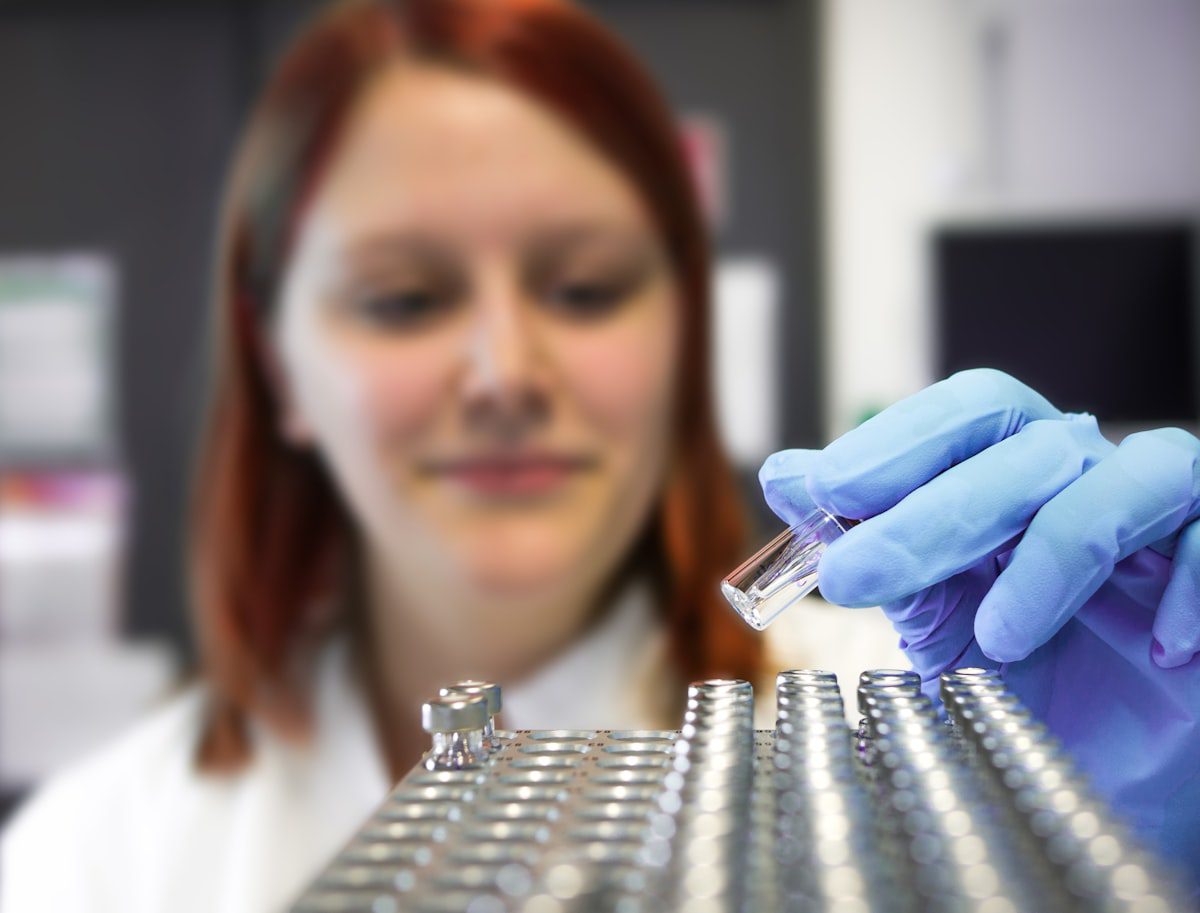
Researchers search for the BPC-157 peptide more than almost any other compound in peptide research — and misunderstand it just as often. Forum anecdotes and marketing claims often crowd out a straight answer to a simple question: what does the actual research say? This guide breaks down what BPC-157 is and where it comes from. It also covers what preclinical studies have found (per a 2025 systematic review) and what researchers should know about handling it in a lab setting.
We wrote this article for qualified researchers and for educational purposes only. No regulator has approved BPC-157 for human use, and it is not intended for human consumption.
What Is BPC-157?
The BPC-157 peptide (Body Protection Compound-157) is a synthetic pentadecapeptide: a chain of 15 amino acids. Its sequence runs Gly-Glu-Pro-Pro-Pro-Gly-Lys-Pro-Ala-Asp-Asp-Ala-Gly-Leu-Val, and it weighs approximately 1,419.56 g/mol. Researchers derived it from a fragment of a naturally occurring protein found in human gastric juice.
BPC-157 attracted early research interest largely because of its unusual stability. Unlike most peptides, it remains intact in gastric juice for more than 24 hours. That stability is what led researchers to isolate and study it in the first place.
Proposed Mechanisms of Action
Preclinical research points to several biological pathways through which BPC-157 may act, including:
Angiogenesis promotion. Several studies point to BPC-157’s role in stimulating new blood vessel formation. Researchers theorize this mechanism could relate to its effects on tissue repair models. That same pathway, though, is also why angiogenesis-related compounds warrant careful long-term study.
Cytoprotective activity. Research suggests BPC-157 may help protect cellular structures from certain forms of induced damage in animal models, particularly within gastrointestinal tissue.
Modulation of growth factor pathways. Some studies associate BPC-157 with changes in the expression of pathways linked to tissue regeneration. These include interactions with the VEGF and nitric oxide systems.
Researchers have not definitively established BPC-157’s exact receptor or binding target. Pinning it down remains an active area of ongoing research.
What the Research Shows
Most of the available data on BPC-157 comes from animal and in-vitro models rather than human clinical trials. The literature documents these findings:
- Tendon and ligament models — studies in rats have examined BPC-157’s effects on tendon fibroblast activity and ligament healing timelines.
- Gastrointestinal models — early research on BPC-157 grew out of its gastroprotective properties in the gut.
- Pharmacokinetics — in rodent models, BPC-157 has shown bioavailability via intramuscular and intravenous routes. Researchers report an elimination half-life of roughly 8 to 30 minutes.
Human data remains limited to a small number of early studies. Major regulatory and anti-doping bodies have stated plainly that safety and efficacy in humans remain unestablished.
Regulatory and Legal Status
Researchers should know BPC-157’s current standing:
- No major drug regulator, including the FDA, has approved it for any human therapeutic use.
- The World Anti-Doping Agency (WADA) added BPC-157 to its list of prohibited substances in 2022.
- Australia and New Zealand classify it as prescription-only, even though a legitimate prescription pathway doesn’t exist for it.
Because of this status, qualified personnel should handle research-grade BPC-157 strictly within a laboratory setting. They should never repurpose it for human or veterinary use.
Handling BPC-157 in the Lab
Like most research peptides, suppliers typically ship the BPC-157 peptide as a lyophilized (freeze-dried) powder. It requires reconstitution with bacteriostatic water before researchers use it in an experimental protocol. A few handling notes matter for research integrity:
- Storage: Keep lyophilized peptide in a freezer (roughly -4°F to -20°F) for long-term storage, protected from light. Once reconstituted, refrigerate it and use it within the timeframe your protocol specifies.
- Reconstitution: Use bacteriostatic water rather than plain sterile water — it helps inhibit bacterial growth across multiple uses. Add it slowly along the vial wall, not directly onto the powder, to protect the peptide’s structure.
- Purity verification: Third-party testing (HPLC and mass spectrometry) is the standard way to confirm both purity and identity before researchers use a peptide batch in a protocol. Our BPC-157 research peptide page lists current Certificate of Analysis documentation for each batch.
Frequently Asked Questions
Is BPC-157 the same as “TB-500“? No. TB-500 (a synthetic fragment of thymosin beta-4) is a different peptide. Researchers sometimes discuss it alongside BPC-157 in tissue-repair research, but the two have distinct sequences and proposed mechanisms.
Have researchers studied BPC-157 in human clinical trials? Only a small number of limited, early-stage studies exist. Most of the evidence base is preclinical (animal and in-vitro models).
Why do suppliers sell BPC-157 as “not for human consumption”? Because the FDA and comparable regulators have not evaluated or approved it for safety or efficacy in humans. Suppliers label these products for laboratory research by qualified personnel only.
The Bottom Line
BPC-157 remains one of the more actively studied peptides in preclinical research, particularly around tissue repair and gastrointestinal models. The evidence base is still developing, and no regulator has approved it for human use. Researchers working with BPC-157 should rely on third-party tested material and follow proper storage and handling protocols. They should also stay current with the peer-reviewed literature as it evolves.
We provide this content for informational and educational purposes only; it does not constitute medical advice. Warehouse Peptides sells its products strictly for laboratory research use, not for human or animal consumption.